
Loglap cladding area minus windows and doors
Estimate loglap cladding area for a wall with a window and a door. See how 18 m² becomes 14.4 m² and use that figure to estimate board length.
Practical Budova guides with formulas, purchasing examples, material allowances and common mistakes before you buy.
Author: Budova editorial team.
Estimate loglap cladding area for a wall with a window and a door. See how 18 m² becomes 14.4 m² and use that figure to estimate board length.
Count wallpaper rolls by full-height drops. See why two walls of 12 m² each can need 3 or 4 rolls, and how to check your own cut lengths.
Use the tile box label to check the size and coverage of a 1.44 m² box. Note how the price is quoted, then enter the details in Budova.
Work out how many floorboards you need for an 8.16 m² room. Compare 29 boards by area with the 30 boards needed in one laying direction.
Tile cost with an allowance in two price units: 55 tiles at 69.95 UAH give 3,847.25 UAH. Convert the price per tile to a price per m² and check the total.
Area of an L-shaped room two ways: the example gives 15.12 m² net area. Enter it in the Budova tile calculator.
How many sheets of plywood for 12 m²: 6 or 5 with 1220 × 2440 or 1250 × 2500 mm sheets and a 10% reserve. Purchased area, rounding and cutting limits.
Calculate plaster volume from wall area and thickness. See how 18 m² at 15 mm gives the volume in litres and how to estimate dry mix bags.
Tongue-and-groove lining for 12 m²: overall width 90 mm, cover width 80 mm, 50 boards of 3 m, or 55 with an assumed 10% reserve. A checked Budova example.
Two floors of 7.20 m² with 600 × 600 mm tiles: why the number of tiles differs, 24 versus 21, and how the Budova methods differ.
Number of aerated concrete blocks for a 5 × 3 m wall with a window and a door: 11.10 m² net area, 600 × 200 × 300 mm blocks, 91 + 5 = 96 in Budova.
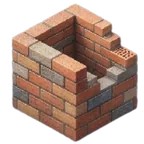
How many bricks for a 5 × 3 m wall with door and window openings: 11.20 m² net area and approximately 572 + 29 = 601 bricks in Budova.
Screed in several rooms: areas of 12, 20 and 8 m² give 1.920 m³. Check the weighted thickness of 48 mm and apply an allowance only once.
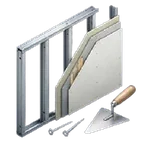
Number of drywall sheets for a 5 × 3 m wall with a door: 12.90 m² of lining, 1200 × 2500 mm sheets, 5 base sheets or 6 with a 10% reserve.
Number of OSB sheets for a 4 × 5 m area: convert it into whole 1250 × 2500 mm sheets, add an allowance separately and tell area from a cutting layout.
Board volume in cubic meters: 25 × 100 × 3000 mm gives 0.0075 m³. Convert millimeters, calculate a batch and round to whole boards without mixing units.
Finishing filler for walls of 45 m²: 1.5 mm coats, two coats, a 10% allowance and rounding to 6 bags. Example with manufacturer consumption data.
Bathroom tiles for a 2.4 × 1.8 m room: calculate four walls, subtract a 0.8 × 2 m doorway and check the net area of 19.4 m² in Budova.
Cement price per bag of 25 kg and per tonne: convert to one unit, separate the calculated mass from whole bags and compare both price modes in Budova.
Plaster for an uneven wall of 45 m²: a 15 mm weighted average thickness, 573.75 kg without allowance and 22 bags with no double allowance.
How to read a tile estimate in Budova for 22 m²: price per m², base cost, purchase area and expenses you need to add separately.
How much paint for a room of 4 × 3 m: openings, two coats, conversion from m²/L to L/m² and rounding the purchase to whole cans.
Wallpaper with a pattern repeat of 53 cm, straight match: 28 strips and 10 rolls. Why dividing wall area by roll area gives a different purchase quantity.
Primer consumption for 40 m²: different absorption in two areas, rate in L/m², one coat and choosing containers without adding an allowance twice.
How many tiles for a floor of 12 m²: tile area, allowance, rounding to boxes and why to review the layout before buying.
Calculate screed volume for a 20 m² room and see how an extra 10 mm changes the amount of material you need to buy.
Material allowance on a 20 m² example: base quantity, allowance and rounding to packs. Three separate figures for your shopping list.